
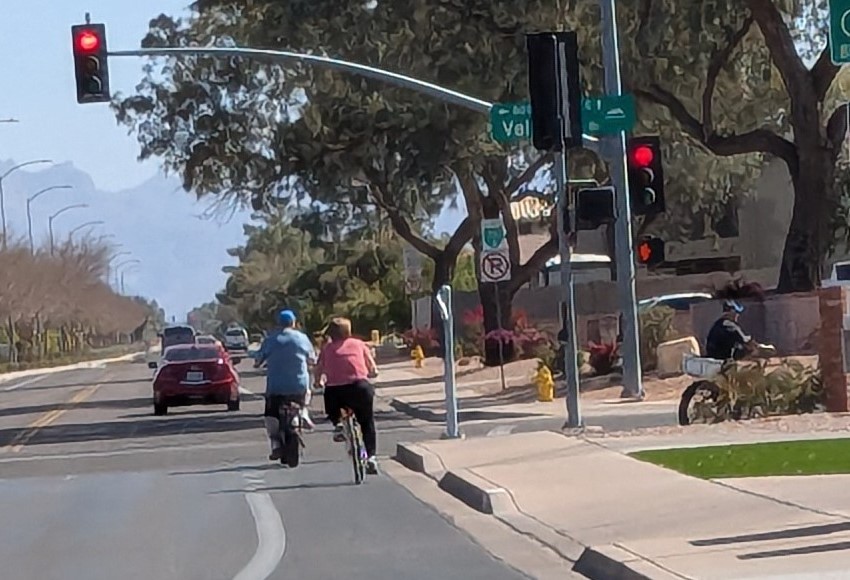
The Arizona Department of Transportation is continuing to develop guidance documents on ways to improve safety for people who walk and people who bike. The Coalition of Arizona Bicyclists participated in the development and provided input on the 2023 and 2024 plans. It is our goal as Active Arizona, to be involved in the development of the 2026 State Active Transportation Plan. Continue reading ADOT Continues Work to Develop Documents to Improve Safety for People Walking and People on Bikes
Author: News Letter

Maps, Maps, and More Maps
When advocating for better active transportation infrastructure, maps can be helpful for both doing research and presenting information. Many government agencies, communities and other organizations have maps available for public use. There are maps showing crash locations, roadway safety projects, traffic volumes, travel times, and more.
In this article, we highlight some of the maps that members of the Coalition of Arizona Bicyclists have found helpful. Examples of the following types of maps are listed below.
- Bicycle Lane Maps
- Community Development Maps
- Crash Location Maps
- Motorized Traffic Volume Maps
- Non-motorized Traffic Volume Maps
- Recreation Map
- Roadway Condition Maps
- Roadway Ownership Maps
- Roadway Safety Project Map
- Suggested Improvements Maps
- Travel Distance Maps
- Vehicle Ownership Map

Low Stress Bicycle Facilities Increase Bicycle Use as Transportation
While we have known for some time that bicycle infrastructure leads to more people on bicycles, recent research published in Nature Cities quantified the amount that protected bicycle lanes increase roadway use by people on bicycles. This study, conducted in 28 different cities in the United States, found that more people ride bicycles and that people ride farther when there are protected bicycle lanes. Continue reading Low Stress Bicycle Facilities Increase Bicycle Use as Transportation

Economics and Bicycling in Arizona
As people involved in bicycle advocacy, we often hear people who don’t support active transportation talking about bicycle infrastructure as if it adds no value or creates some sort of burden on our communities.
This article provides responses to some of those statements.

FHWA Bike Lanes on Higher Speed Roads Summary
In June of 2024, the Federal Highway Administration (FHWA) released their guidance on Separated Bike Lanes on Higher Speed Roadways: A Toolkit and Guide. The guide can be helpful for advocates and transportation planners in understanding how to promote and plan for the appropriate types of bicycle facilities on higher speed roadways. In this article, the Coalition of Arizona Bicyclists has summarized that guide. Continue reading FHWA Bike Lanes on Higher Speed Roads Summary
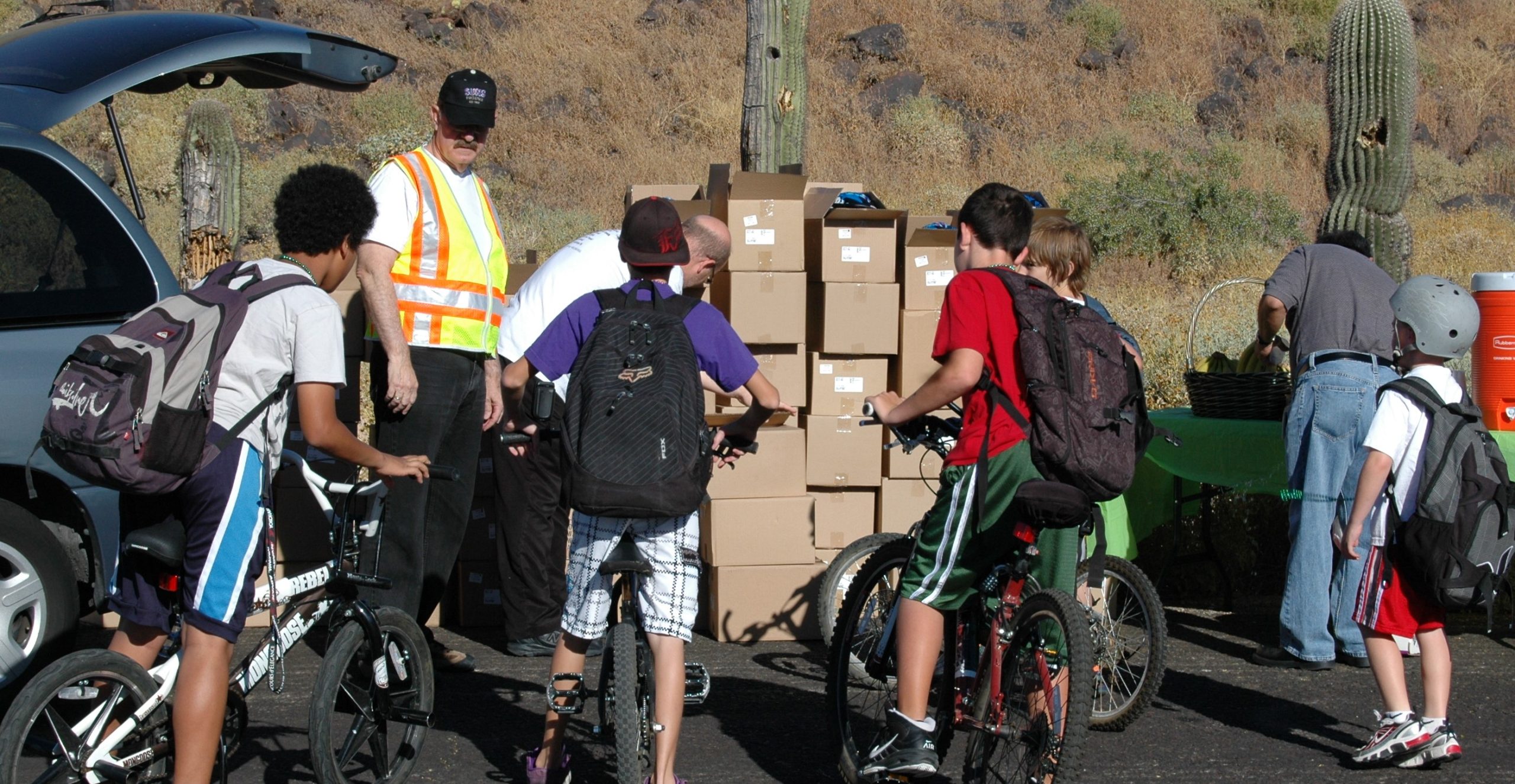
Arizona Bicycle Organizations – Volunteer and Riding Opportunities
Are you looking for bicycle advocacy or volunteer opportunities in your community or at the state or regional level?
Or are you looking for more opportunities to ride your bicycle?
The Coalition of Arizona Bicyclists has compiled a list of advocacy groups, community organizations, and bicycle clubs. Continue reading Arizona Bicycle Organizations – Volunteer and Riding Opportunities
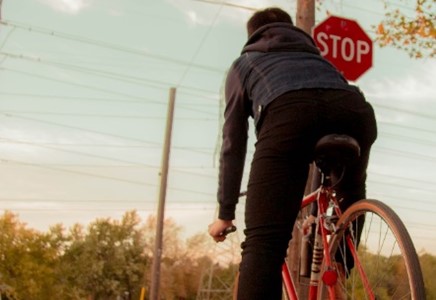
Stop as Yield aka “The Idaho Stop”
The Idaho Stop is the common name for any law that allows people who are riding bicycles to treat a stop sign as a yield sign, and/or a red traffic signal as a stop sign.
It is often referred to as the Idaho Stop as Idaho was the first state to adopt the law. Examples of existing laws are shown in the appendix below. Continue reading Stop as Yield aka “The Idaho Stop”

Here’s a List of Organizations that Have Bicycles for People Who Need Them
While the Coalition of Arizona Bicycles doesn’t provide bicycles, there are groups throughout Arizona that refurbish bicycles and provide them to people who need bikes. These groups provide bicycles for adults and children. Some of these groups provide shop space for doing repairs, earn-a-bike programs, repair and maintenance instruction, and more. These groups have opportunities for volunteers and are often looking for donations of bicycles, parts, tools and/or cash. Continue reading Here’s a List of Organizations that Have Bicycles for People Who Need Them
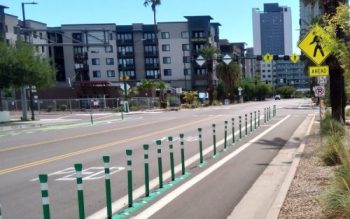
Bike Lanes Make Roads Safer for All Road Users
Bike lanes reduce crashes and fatalities for all road users and make the roadway more comfortable for both motor vehicle drivers and people riding bicycles. According to Barbara McCann, the director of Safety, Energy & Environment at the U.S. Department of Transportation (USDOT), bicycle lanes “reduces the frequency of crashes. It calms traffic, which makes streets less chaotic and safer for everyone.” Continue reading Bike Lanes Make Roads Safer for All Road Users

People Who Ride Bicycles Have a Positive Impact on Local Economy
There are many studies that show people who ride bicycles in urban areas shop more often and spend more money with local businesses than people who drive cars. This means that in addition to supporting local businesses, bike riders are likely paying more money in local taxes that vehicle drivers.
When advocating for bicycle infrastructure, remember that government representatives, community leaders, and business owners typically underestimate the number of people who bike and how much money they spend. To help with these conversations, the Coalition of Arizona Bicyclists is providing these references to bicycle economic impact studies.
- In Pima County’s report on the Loop, they estimated that for every $1 spent on the multiuse path the county received $9.40 in economic benefits. https://www.americancityandcounty.com/2021/11/15/trails-greenways-and-parks-infrastructure-projects-boost-economic-activity-and-help-residents-live-healthier-lives/
- After a road diet on a street in Fort Worth, Texas restaurants showed a 179% revenue increase. Blue, Bikenomics, How Bicycles Can Save The Economy, Microcosm Publishing, 2016
- In an area of Los Angeles, California where motor vehicle lanes were removed and replaced with bicycle lanes, the sales taxes collected almost doubled.https://nacto.org/docs/usdg/yorkblvd_mccormick.pdf
- A study from researchers at New York University (NYU) shows that restaurants closer to bike share stations do better business than those farther away. They found that food retailers (typically restaurants) in the Brooklyn neighborhoods closest to bike share stations saw their total volume of business increase from between .2 and .5 percent in the years after bike share stations were added. Food retailers in the same neighborhoods located farther from bike share stations saw level or slight decreases in retail volume. https://arxiv.org/ftp/arxiv/papers/1712/1712.00659.pdf
- Another study in New York, New York found that sales increased 12 percent after a bike lane was added. https://nyc.streetsblog.org/2022/09/30/business-grew-on-queens-street-after-controversial-bike-lane-installed-data-show/
- A third study in New York City found that businesses on streets that remained closed to motor vehicle traffic after the COVID 19 pandemic showed sales increases of 19% over pre-pandemic levels, while businesses on streets that remained open to motor traffic during the pandemic showed reduced sales. https://www.route-fifty.com/infrastructure/2022/10/what-closing-streets-cars-meant-restaurant-sales-new-york-city/378902/
- A study of 12 Portland, Oregon area active transportation projects showed overall positive impact on local economy. 75% of the projects showed measurable economic improvement for both food and retail businesses. The projects that did not show economic improvement were areas with higher motor vehicle volumes and/or higher motor vehicle speeds. https://trec.pdx.edu/news/active-transportation-projects-offer-solid-returns-investment-economic-study-finds https://www.oregonmetro.gov/sites/default/files/2022/05/15/Active-Transportation-Return-on-Investment-study-2022.pdf
- A study in San Francisco, California found that bike lanes “rarely produce profoundly negative outcomes, and that they are often associated with positive business performance outcomes” and that “different types of businesses experience bicycle lane interventions differently, [so] transportation planners need to understand and carefully account for the mix of businesses in implementation sites.” https://journals.sagepub.com/doi/10.1177/0361198118792321
- A study conducted in Toronto, Ontario, Canada found that in an area where street parking was replaced with a bike lane there was an increase in both the number of customers at retail businesses and the amount spent.https://www.tcat.ca/business-is-up-on-bloor-after-bike-lane-new-study-finds/ https://www.tandfonline.com/eprint/XAKZKXBAV87MIAK4TACP/full?target=10.1080/01944363.2019.1638816